Author: Dennis Dailey

  • PsynergyHealth Is Taking AI Beyond the Tool — and Owning the Outcome

    PsynergyHealth Is Taking AI Beyond the Tool — and Owning the Outcome

    By combining AI-native technology with on-demand clinical services, PsynergyHealth is rethinking how health systems expand capacity, support clinicians and deliver care.

    Healthcare has no shortage of AI tools. But what happens when AI becomes part of the actual delivery of care — and the company providing it takes responsibility for the outcome?

    That’s the model PsynergyHealth is building.

    In this HITshow conversation, Chanakya Denduluri explains the idea behind AI-native clinical services: combining intelligent technology, clinical workflows and an on-demand clinical workforce to give health systems additional capacity when and where they need it.

    Rather than simply providing another platform for clinicians to use, PsynergyHealth is focused on delivering the service itself — helping health systems address workforce constraints, extend access and manage care across the patient journey.

    The distinction is captured in a phrase that came up repeatedly in our conversations: “owning the outcome.”

    That shifts the discussion beyond whether AI can automate another task. The bigger question becomes whether AI-enabled clinical services can help health systems fundamentally change how care is delivered.

  • Can AI Agents Help Get Therapies to Patients Faster?

    Can AI Agents Help Get Therapies to Patients Faster?

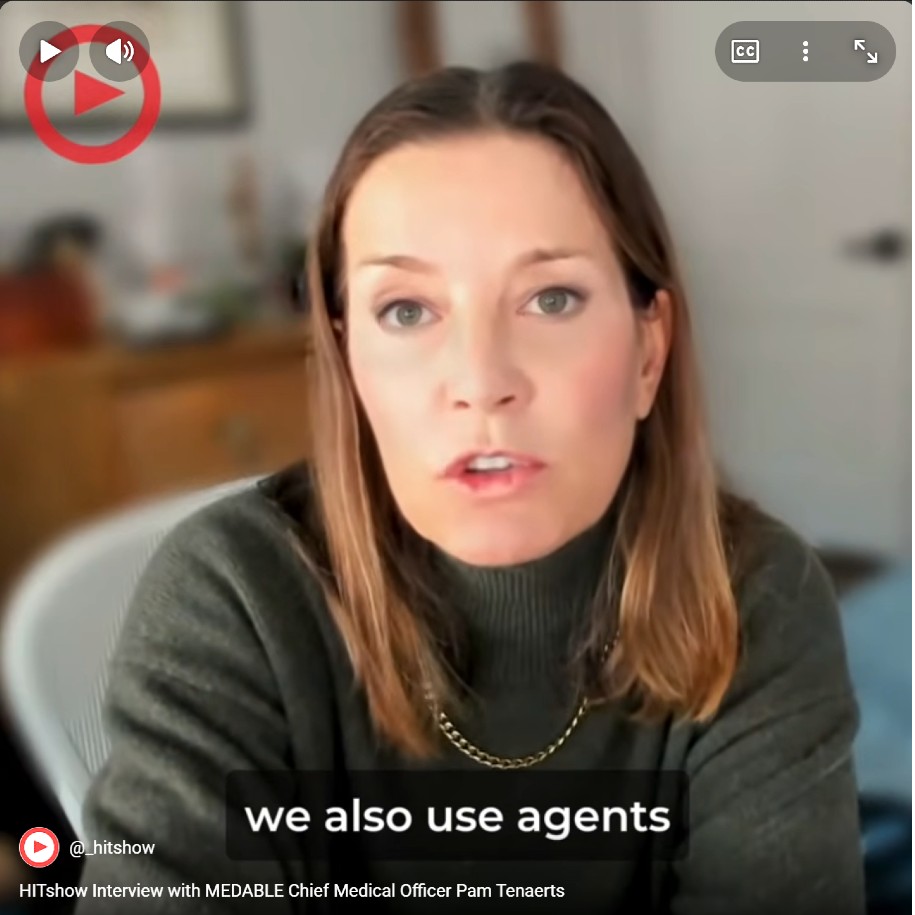
    Medable’s Pam Tenaerts explains how decentralized technologies and AI agents can cut clinical trial bottlenecks from days to hours.

    Clinical trials generate enormous amounts of data—but the people running them can spend an extraordinary amount of time simply finding, connecting and making sense of that information.

    Pam Tenaerts, Chief Medical Officer at Medable, says the opportunity for AI isn’t just to automate clinical research. It’s to remove the operational bottlenecks that slow trials down.

    Medable is combining decentralized trial technologies—which allow more of the trial to come to participants and research sites—with AI agents designed to help clinical trial teams work across fragmented systems.

    Consider the clinical trial monitor. Tenaerts says the average monitor may need to work across 13 different systems, repeatedly logging in and out, connecting information and preparing for site visits.

    🤖 Medable’s approach uses AI agents—including specialized sub-agents coordinated by what Tenaerts describes as a “super agent”—to do much of that preparatory work.

    The potential impact is substantial: reducing preparation for a site visit from days to hours.

    But Tenaerts says the real objective isn’t simply efficiency.

    “What we’re trying to do is eliminate that bottleneck, which eventually will mean better therapies to patients who need it.”

    💡 Why it matters: Every unnecessary delay inside a clinical trial can ultimately become a delay in getting an effective therapy to patients. If AI can safely compress the administrative and operational work surrounding clinical research, its value won’t just be measured in hours saved—it could be measured in how quickly new treatments reach the people waiting for them.

    ▶️ Watch the HITshow conversation with Pam Tenaerts, Chief Medical Officer at Medable.

    #HITshow #Medable #ClinicalTrials #ClinicalResearch #ArtificialIntelligence #AI #AIAgents #DecentralizedClinicalTrials #DigitalHealth #LifeSciences #HealthTech

  • The AI Pilot is the easy part

    The AI Pilot is the easy part

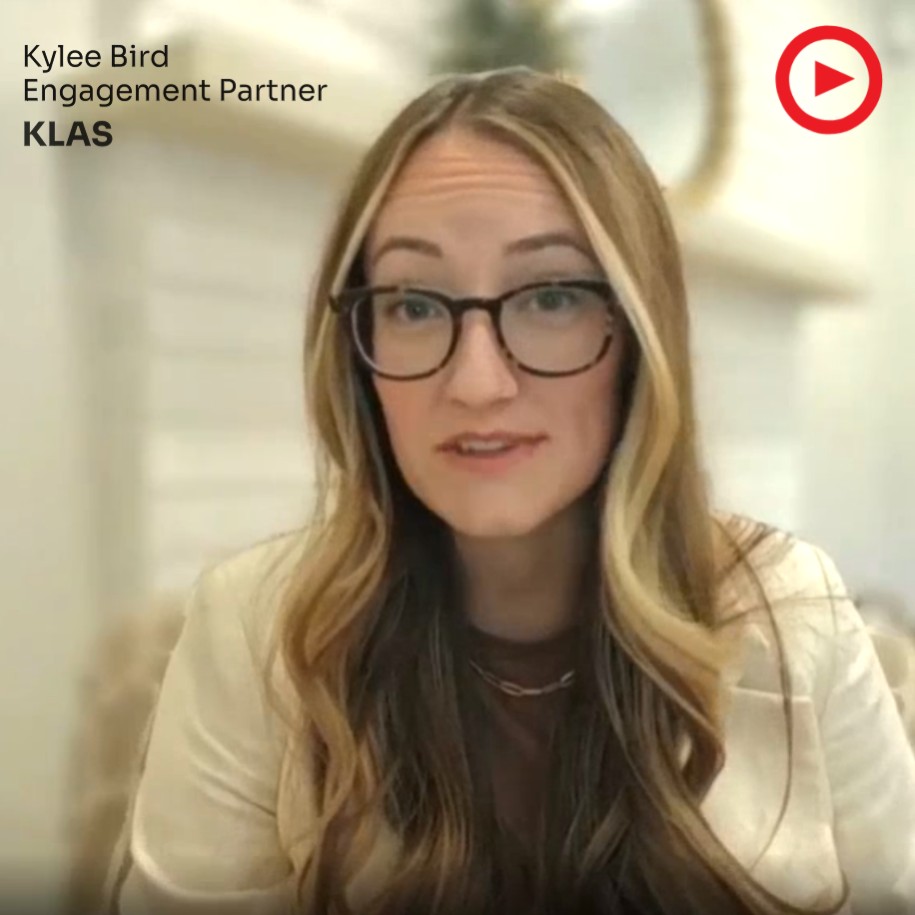
    HITshow Video Feature with Suki’s Vikram Khanna and Kylee Bird from KLAS

    The real test begins when a health system tries to scale that technology across skeptical users, different specialties, fragmented locations and complex governance structures.

    In this new HITshow Video Feature, leaders from Suki and KLAS Research discuss what healthcare organizations now expect from ambient AI—and why promising demonstrations and time savings are no longer enough.

    With health system margins shrinking, leaders are demanding validated outcomes and a clear return on investment before committing to enterprise-wide adoption.

    The conversation explores:

    ▪️ Why so many successful pilots struggle at scale
    ▪️ The change management and governance required for enterprise adoption
    ▪️ Why trust must be earned with every clinical note generated
    ▪️ How independent provider feedback helps health systems evaluate technology
    ▪️ Why reducing clinicians’ mental load may be as important as saving time
    ▪️ How AI can help highly skilled professionals return their focus to patients and the work they were trained to do

    As one participant explains, Suki users report feeling empowered to “love their jobs again.”

  • What happens when AI takes the mundane work off our hands?

    What happens when AI takes the mundane work off our hands?

    HITshow Video Feature with Innovaccer Strategic Advisor Jeff Spight

    In this HITshow video feature, Jeff Spight sees an enormous opportunity for healthcare organizations to automate the 90% of routine transactions—so their most talented people can concentrate on the 10% where expertise, judgment and human attention create the greatest value.

    That shift is especially important in revenue cycle management.

    Instead of constantly looking backward and asking, “What did we do?” AI can help organizations look ahead:
    + What can we do?
    + What needs to happen next?
    + How can we free up more time for clinicians?
    + How can we improve the experience between patient visits?

    As Jeff explains, RCM could become much more than an administrative function. It could be the thing that unlocks what healthcare organizations are able to do next.

  • Healthcare has never had more intelligence

    Healthcare has never had more intelligence

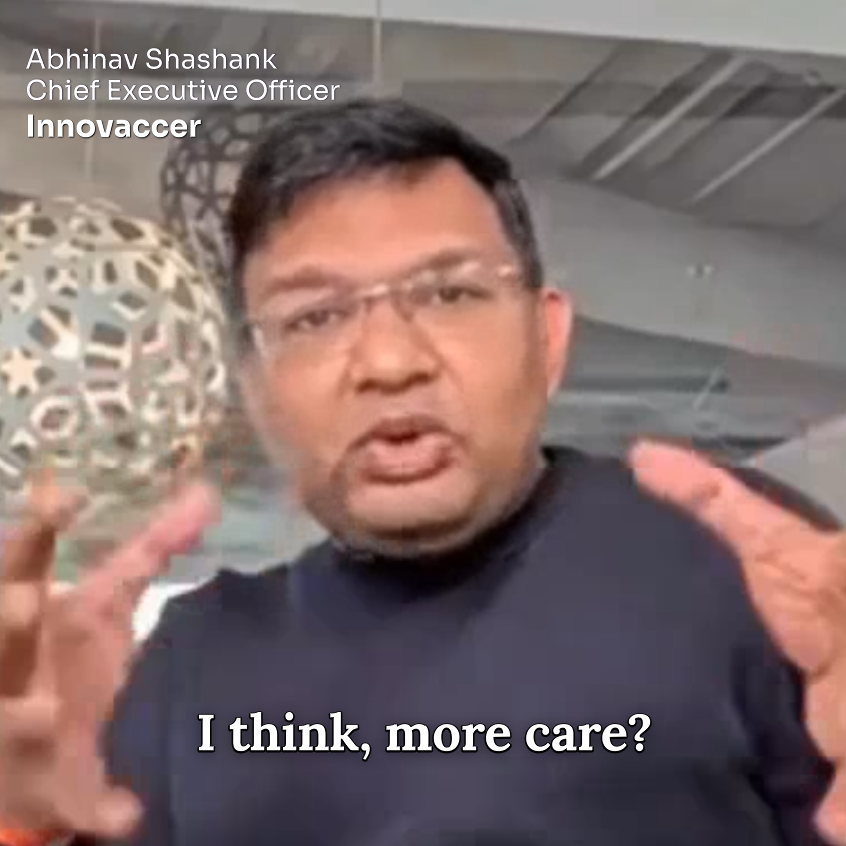
    Insightful conversation with Innovaccer CEO Abhinav Shashank

    Healthcare has never had more intelligence.

    Clinical intelligence. Operational intelligence. Financial intelligence. Artificial intelligence.

    Yet many of the people working in healthcare still spend too much of their day on administrative work that pulls them away from patients.

    That contradiction came to mind during my recent conversation with Innovaccer CEO Abhinav Shashank.

    Rather than talking about AI as another technology layer, he reframed the conversation around something much more fundamental:

    “We need to move the administrative dollars back into care dollars.”

    I think that’s a powerful way to look at where healthcare is headed.

    If healthcare autonomy can eliminate unnecessary administrative burden, we’re not just improving efficiency. We’re giving clinicians more time to care for patients, helping organizations operate more effectively, and making the entire system work the way it was always intended to.

    This conversation is only a couple of minutes long, but it captures an idea I believe we’ll be discussing for years to come.

    HealthcareAI #HealthcareAutonomy #HealthIT #HealthcareInnovation #DigitalHealth

  • Protecting the Patient-Clinician Relationship in the Age of AI

    Protecting the Patient-Clinician Relationship in the Age of AI

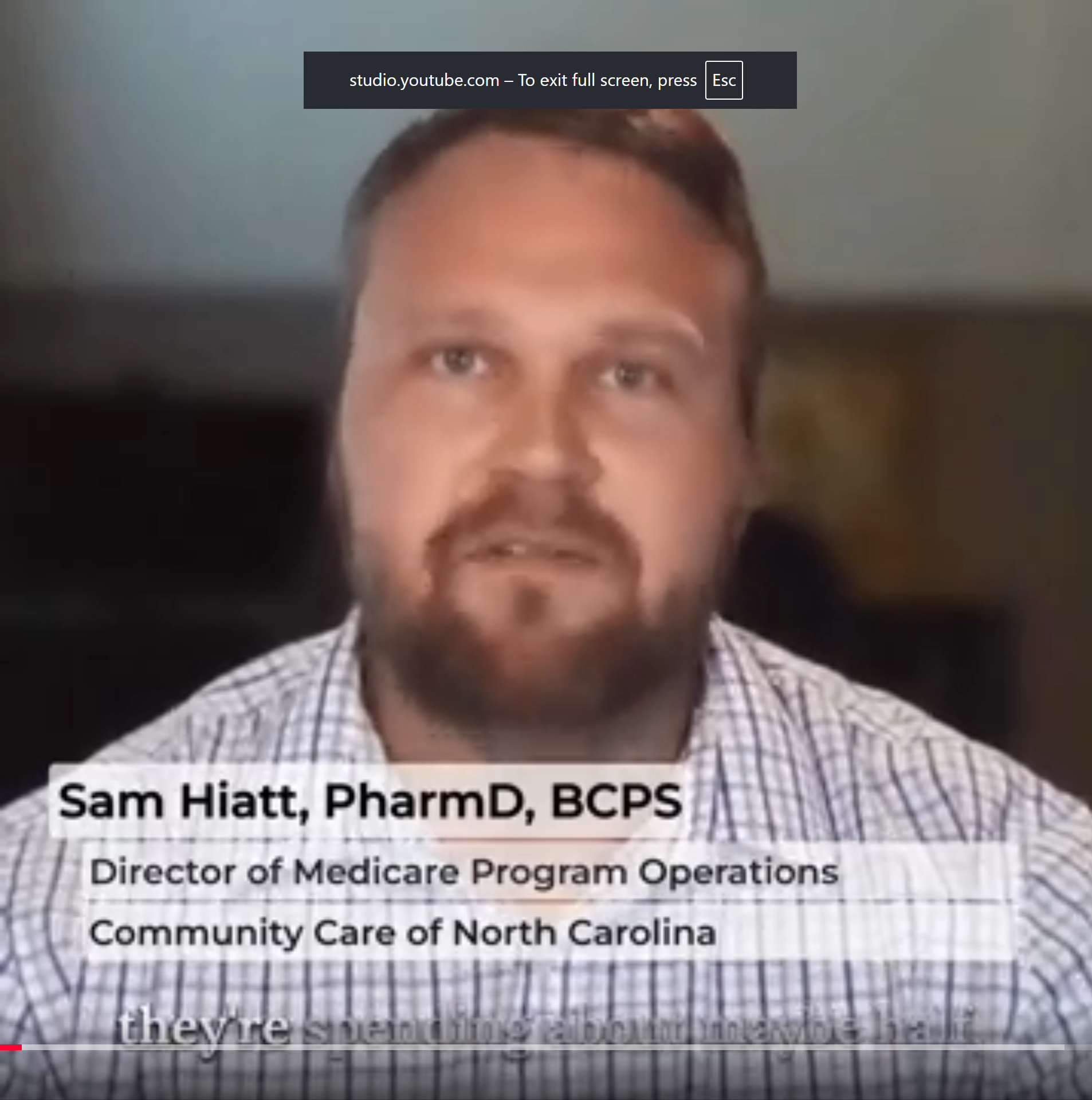
    HITshow | Sam Hiatt, Director of Medicare Program Operations, Community Care of North Carolina

    Protecting the Patient-Clinician Relationship in the Age of AI
    HITshow | Sam Hiatt, Director of Medicare Program Operations, Community Care of North Carolina

    Value-based care is not just about what happens during the office visit. It is about what happens the other 360 days of the year.

    In this HITshow conversation, Sam Hiatt of Community Care of North Carolina explains why getting clinicians more time with patients matters so much — and why administrative burden continues to get in the way.

    The promise of AI in healthcare is not simply automation for its own sake. It is the opportunity to give clinicians time back, reduce after-hours documentation, and help care teams focus on the conversations that build trust.

    Sam also shares how Community Care of North Carolina is working with Innovaccer and upgrading to Gravity as part of that effort.

    The goal is not to replace the relationship between patient and clinician.

    The goal is to protect it.

    How is your organization using AI technology to improve communication and patient trust?

    📲 Subscribe to HITshow and follow HIT.show on LinkedIn for more thought leadership from innovators and leaders across healthcare.

  • Weight Watchers Med+ to Support Medicare Members Seeking GLP-1 Access Through Bridge Program

    Weight Watchers Med+ to Support Medicare Members Seeking GLP-1 Access Through Bridge Program

    Weight Watchers expands access for Med+ Medicare beneficiaries to GLP-1 medications covered by the Medicare Bridge Program

    WW International, Inc. said Weight Watchers Med+ will support Medicare beneficiaries seeking access to GLP-1 weight-loss medications through the Medicare GLP-1 Bridge Program.

    The program, scheduled to run from July 1, 2026, through Dec. 31, 2027, allows eligible Medicare beneficiaries to purchase covered GLP-1 medications for weight loss for $50 per month. Weight Watchers said its Med+ program will help members determine eligibility, obtain prescriptions when clinically appropriate, and navigate insurance coverage, paperwork and prior authorization requirements.

    The Medicare GLP-1 Bridge Program applies to eligible beneficiaries with Medicare Part D coverage who meet clinical requirements and have a prescription for an eligible GLP-1 medication. Weight Watchers said covered medications include Zepbound, KwikPen, Foundayo and Wegovy pen and pill. The medications are intended to be used alongside lifestyle interventions, including nutrition support and physical activity.

    “For many people, weight loss is about health, mobility and being able to keep doing the things they love,” said Scott Honken, PharmD, chief commercial officer of Weight Watchers. “At Weight Watchers, our goal is to make the process feel less overwhelming by helping members understand their options, access care and receive a GLP-1 prescription if they’re eligible, while also providing the support they need to live well on treatment.”

    Weight Watchers Med+ combines clinical care with behavioral support, including nutrition guidance, medication tracking, refill reminders and access to GLP-1 coaches through the company’s GLP-1 Success Program. The company said the program also includes strength-building guidance designed to help older adults preserve muscle mass and reduce the risk of frailty and falls during weight loss treatment.

    Weight Watchers said its data show Med+ members prescribed a GLP-1 medication who regularly engaged with the GLP-1 Success Program lost 29.1 percent more body weight on average at 12 months than those who did not engage in behavioral support. The company also reported that 73 percent of Med+ members using the GLP-1 Success Program said Weight Watchers Med+ helped minimize medication side effects.

    Weight Watchers said the program reflects its broader strategy of combining medication access, clinical oversight, digital tools and lifestyle support for people using GLP-1 therapies.

  • Why So Many Healthcare AI Pilots Never Make It Past the Pilot Phase

    Why So Many Healthcare AI Pilots Never Make It Past the Pilot Phase

    Healthcare doesn’t have an AI shortage. It has an orchestration problem.

    Right now, health systems everywhere are launching AI initiatives at a staggering pace — copilots, workflow agents, ambient documentation tools, predictive models, automation layers, operational assistants. Every week brings another announcement promising lower costs, less burnout, faster workflows, better patient engagement, cleaner operations.

    Some of these technologies are genuinely impressive.

    That’s not the issue.

    The issue is what happens after the pilot succeeds.

    Because once organizations try scaling AI beyond a controlled environment, the conversation changes fast. Suddenly the challenge isn’t intelligence. It’s operational reality. The pilot may have proven the technology. It hasn’t necessarily proven the organization is ready to scale it.

    The AI works.

    The enterprise doesn’t.

    Healthcare organizations are discovering that deploying AI inside one workflow is relatively easy. Deploying it consistently across an entire operational ecosystem is something very different.

    A revenue cycle pilot may improve denials management in one department. An AI assistant may reduce documentation burden for a specific group of clinicians. A contact center tool may shorten response times. Those are meaningful wins.

    But scaling those gains across hospitals, departments, governance structures, staffing models, and legacy systems introduces a completely different level of complexity — especially inside organizations where operational fragmentation already exists.

    And let’s be honest: fragmentation is the norm in healthcare.

    Most large healthcare enterprises are operating across disconnected workflows, siloed data environments, overlapping technologies, inconsistent governance models, and operational teams that often function independently from one another. AI doesn’t automatically solve those problems. In many cases, it exposes them faster.

    That’s why so many organizations are running into the same uncomfortable realization:

    AI pilots are creating activity faster than organizations are creating the operational readiness required for transformation.

    In some environments, healthcare is unintentionally recreating the very technology sprawl it spent the last decade trying to clean up — only now with AI agents layered into the mix.

    Different departments adopting different tools.

    Different integrations.

    Different governance reviews.

    Different workflow assumptions.

    Different security models.

    Different operational definitions of success.

    From the CIO perspective, this isn’t just an innovation challenge anymore. It’s an architectural one.

    Most healthcare technology leaders are no longer asking: “How do we deploy more AI?”

    They’re asking: “How do we prevent AI from becoming another disconnected layer inside an already disconnected enterprise?”

    That’s a far more strategic question.

    Because the hardest part of healthcare AI is no longer building intelligence. The industry is moving remarkably fast on that front.

    The hard part is operationalizing intelligence safely, consistently, and at enterprise scale.

    That means solving for:

    • governance,
    • interoperability,
    • workflow continuity,
    • auditability,
    • operational visibility,
    • and coordinated execution across departments.

    It also means recognizing that enterprise AI is not simply a technology deployment. It’s an operational systems challenge.

    Once AI begins influencing workflows across multiple parts of an organization, the stakes change quickly. Now you’re dealing with accountability structures, human oversight, escalation paths, workflow conflicts, compliance requirements, and organizational trust.

    And trust may ultimately become the defining issue.

    Healthcare organizations are not going to scale autonomous operations across the enterprise without confidence that systems are coordinated, observable, governed, and aligned operationally.

    This is where the conversation around healthcare AI is beginning to mature.

    The industry is slowly moving beyond the idea of isolated AI tools and toward something larger: operational orchestration.

    The organizations gaining the most traction are increasingly focused on creating shared operational foundations — unified data environments, coordinated workflows, centralized governance, enterprise-wide visibility, and architectures capable of supporting intelligence across the entire organization rather than inside isolated use cases.

    That shift is also driving growing interest in unified operational platforms designed to coordinate data, governance, workflows, and AI execution across the enterprise rather than through isolated point solutions. Platforms like Innovaccer’s Gravity are emerging around this exact idea: that healthcare organizations may ultimately need a shared operational and intelligence layer capable of supporting enterprise-wide orchestration making workflows autonomous rather than disconnected automation.

    Because eventually every AI conversation leads to the same place:

    What is the operational backbone capable of turning successful pilots into repeatable enterprise execution?

    Without that foundation, even successful pilots struggle to evolve into enterprise transformation.

    Healthcare absolutely needs AI. Few industries stand to benefit more from intelligent automation, operational assistance, and workflow coordination.

    But healthcare may need operational alignment even more.

    The organizations that ultimately lead this next phase of transformation will probably not be the ones deploying the largest number of AI tools.

    They’ll be the ones capable of coordinating intelligence, workflows, governance, and operations across the enterprise without creating even more fragmentation in the process.

    That’s the real challenge now.

    And finally, the industry is starting to talk about it.
  • ShelterZoom Introduces Spare Tire Platform Focused on Continuous Operations and Cyber Resilience

    ShelterZoom Introduces Spare Tire Platform Focused on Continuous Operations and Cyber Resilience

    Platform combines multiple products aimed at maintaining system availability and reducing operational disruption

    ShelterZoom has introduced its Spare Tire platform, a system designed to support continuous operations and operational resilience across organizations. The platform brings together seven products intended to help organizations maintain functionality during system disruptions, including cyber incidents and infrastructure failures.

    The Spare Tire platform is positioned as an alternative to traditional backup and disaster recovery approaches, which typically focus on restoring systems after an outage. Instead, the platform is designed to enable ongoing operations during disruptions by allowing users to access synchronized and validated data in real time.

    The system is built on a combination of external cloud infrastructure, data tokenization, and cryptographic validation. According to the company, this approach is intended to support data integrity, system availability, and secure operations across enterprise environments.

    The platform includes three primary suites:

    • Core Continuity Suite, which includes tools for maintaining electronic health record (EHR) availability, business workflow continuity, and secure infrastructure
    • Protection Suite, which focuses on document tracking, control, and phishing detection
    • AI Suite, which is designed to support governance and verification of AI-generated outputs

    ShelterZoom states that the platform emphasizes proactive continuity rather than reactive recovery, aiming to reduce downtime and eliminate reliance on system restoration processes.

    The company also noted that the platform is intended for use across multiple sectors, including healthcare, life sciences, and government, where system disruptions can impact operations and service delivery.

    Industry perspectives referenced in the announcement highlight ongoing concerns around system outages and cyberattacks, particularly in healthcare, where disruptions can affect patient care and operational efficiency.

  • Phenomix Sciences Releases Survey Findings on Patient Awareness of Obesity Treatment Options

    Phenomix Sciences Releases Survey Findings on Patient Awareness of Obesity Treatment Options

    Report examines views on GLP-1 medications, alternative therapies, and the role of patient education in treatment decisions

    Phenomix Sciences released findings from its “2026 State of Obesity Treatment Report: Progress, Gaps, and the Path to Personalized Care,” based on a national survey of U.S. patients with overweight or obesity who have been treated with GLP-1 medications.

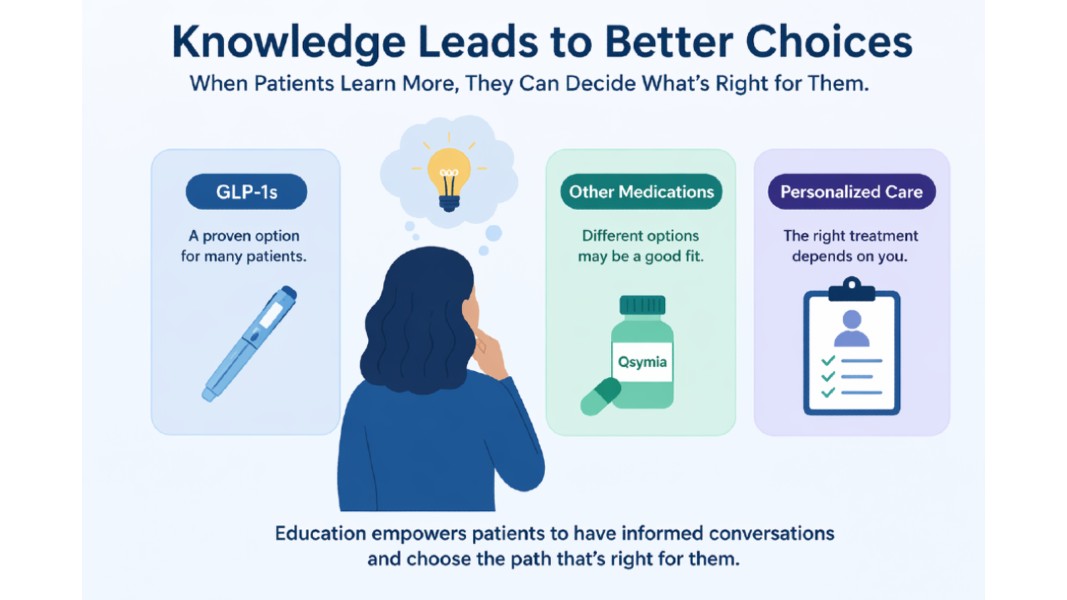
    The report found that awareness of non-GLP-1 weight-loss treatment options remains limited among many respondents. It also found that after receiving information about other and emerging therapies, many participants said they were more open to considering a wider range of treatment options.

    Among the findings, 57% of surveyed patients said they were either completely unaware of or unfamiliar with the details of non-GLP-1 weight-loss options such as Qsymia.

    The survey also found that 68% of respondents changed their views on medications after learning about alternatives. Of those, 25% said they became more open to non-GLP-1 options, 25% said they would want to discuss all options with a healthcare provider, and 18% said they were less interested in GLP-1s.

    Responses also indicated differing views on who GLP-1 medications are best suited for. According to the survey, 39% of respondents said GLP-1s should be available to anyone seeking weight loss, while another 39% said they should be prioritized for people with obesity and serious health risks. Smaller shares said they should be limited to patients with other medical conditions (13%) or used only as a last resort (7%).

    The report also examined attitudes toward oral GLP-1 medications. It found that 42% of respondents said oral GLP-1s would make treatment feel more accessible, while 22% said they would be more open to learning about GLP-1s if oral options were available. Nearly 15% said oral formulations raised additional questions about side effects or effectiveness compared with injectable versions.

    Mark Bagnall, CEO of Phenomix Sciences, said the findings reflect growing interest in more individualized obesity treatment decisions as new therapies become available.

    The survey findings are part of the company’s broader 2026 report, which examines patient perceptions, treatment outcomes, education gaps, and care considerations related to GLP-1 use.