
Phenomix Sciences Survey Highlights Variation in GLP-1 Outcomes, Side Effects, and Follow-Up Care Needs
Report released during Obesity Care Week found that some patients sought additional medical care and incurred out-of-pocket costs while using GLP-1 medications
Phenomix Sciences released findings from its “2026 State of Obesity Treatment Report: Progress, Gaps, and the Path to Personalized Care,” based on a national survey of U.S. patients with overweight or obesity who have used GLP-1 medications.
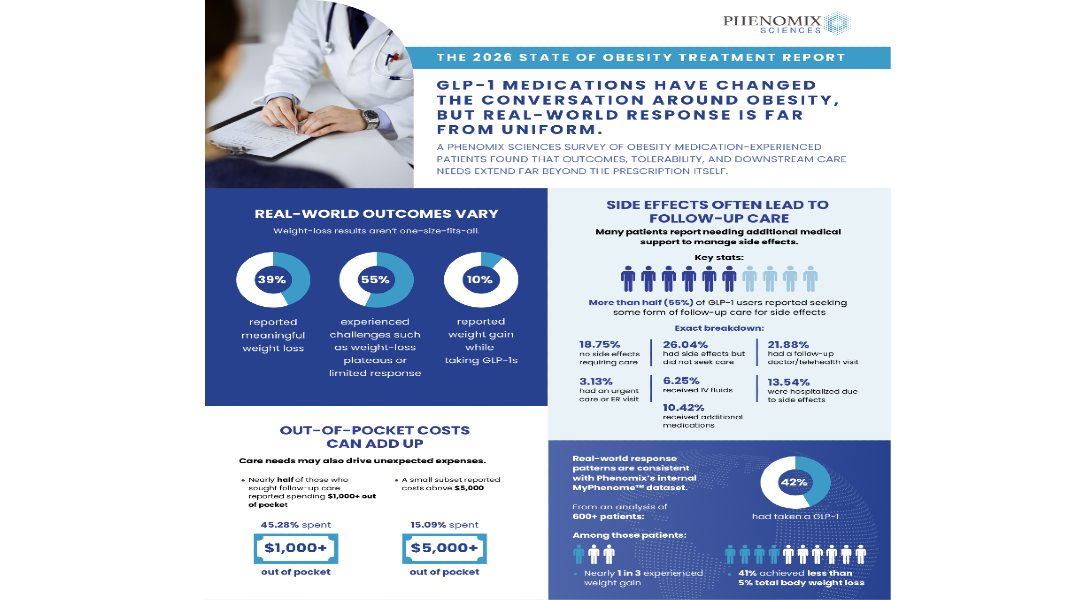
According to the company, the survey found that patient experiences with GLP-1 drugs varied in terms of weight-loss outcomes, side effects, and follow-up care needs. More than half of respondents, 52%, reported seeking some form of medical follow-up for side effects, including telehealth visits, doctor appointments, urgent care, and, in a small number of cases, hospitalization.
Among respondents who sought follow-up care for side effects, nearly half reported spending more than $1,000 out of pocket, while a smaller subset reported costs exceeding $5,000.
The survey also found variation in reported treatment outcomes. Phenomix said 39% of respondents reported meaningful weight loss, while 55% reported challenges such as weight-loss plateaus or limited response. Ten percent reported weight gain while taking the medications.
The report suggests that real-world use of GLP-1 medications may involve additional care needs and costs beyond the prescription itself for some patients.
Natalie Ikeman, an obesity medicine specialist at Bhatti Weight Loss Center, said differences in patient response are an important consideration as obesity treatment options continue to expand. She said tools that help clinicians better understand why patients respond differently may support treatment decisions.
Mark Bagnall, CEO of Phenomix Sciences, said the findings indicate that patients do not respond to GLP-1 medications uniformly and that obesity treatment may require more individualized approaches.
